 Support the Institute
In 2024, just a year and a half ago, 2,666 children in the United States were stolen, many forced into sex labor, and it happened to many kids in your own state, maybe in your own town. Children under 18 years old were raped, over and over, and then moved around like property — every one of these kids with parents who did not know what happened to them.
When we started the Bergel Institute, it was to take serious action on issues that have endured for too long, and to help you do the same. We can neither live in fear of traffickers nor stand by hoping it does not happen to us or our kids.
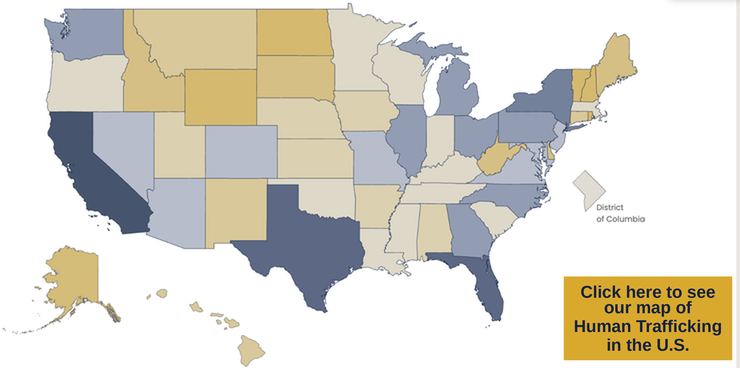
This atrocity — your child or a child near you being stolen from their life and sold for sex — is one of the defining stories of our time, the legacy we are leaving if we choose to ignore it.
The Bergel Institute has developed this interactive map to help you not ignore it but to engage as if it is indeed your own child who is one of the thousands trafficked in this country alone. Or you could see one of the 8,359 females who were trafficked in 2024 as your sister or friend. And if it were, what would you be motivated to do?
If global human trafficking is of interest to you, check out the work of one of our Fellows, Dr. Eirlinai (Lin) Abdul Rahman, who is doing groundbreaking work in India to prevent trafficking before it starts. Lin is building an AI-powered tool to help police and frontline organizations identify trafficking risks earlier, understand vulnerability patterns, and intervene before harm occurs. The pilot in Odisha, India will integrate case records, police data, socioeconomic indicators, heatmaps, and multilingual tools for officers on the ground.
Without this kind of critical prevention and intervention, children in India will continue to be abducted at a rate of one every 15 minutes, with one of those four per hour known to be sold into sex trafficking.
All of this is bad enough, but making it worse is that every statistic and number you have read here is part of a significant under-reporting.

Sincerely,